Posts by Peggy
DIY recipes for the pantry: Hot sauce
I spent the day today with Mark’s Aunt Regina and his stepmom, Patti, at Regina’s house outside Kilgore. Patti had been telling me that the cookbook and recipe collection stuffed in the cupboard above Regina’s refrigerator was a treasure, and she was right.
We set aside two accordion files to go through today, hunting specifically for things Regina, or her mother (that would be my children’s great-grandmother), or Patti had written down. I ended up capturing more than 240 images this afternoon. And occasionally taking notes.
Sometimes Regina just had a list of ingredients and the barest of instructions. We talked through it all, to make sure we knew what we were hanging on to and what we were tossing.
I noticed, as I’ve often seen with older recipes, that most of them were quite simple. Regina clipped and saved a lot of recipes, but you could tell by the splatters which ones she used. Patti asked about one that had long instructions. “Did you make this?” she asked. “Oh, no!” Regina said. “When it takes two pages of instructions, no, I didn’t make it.”
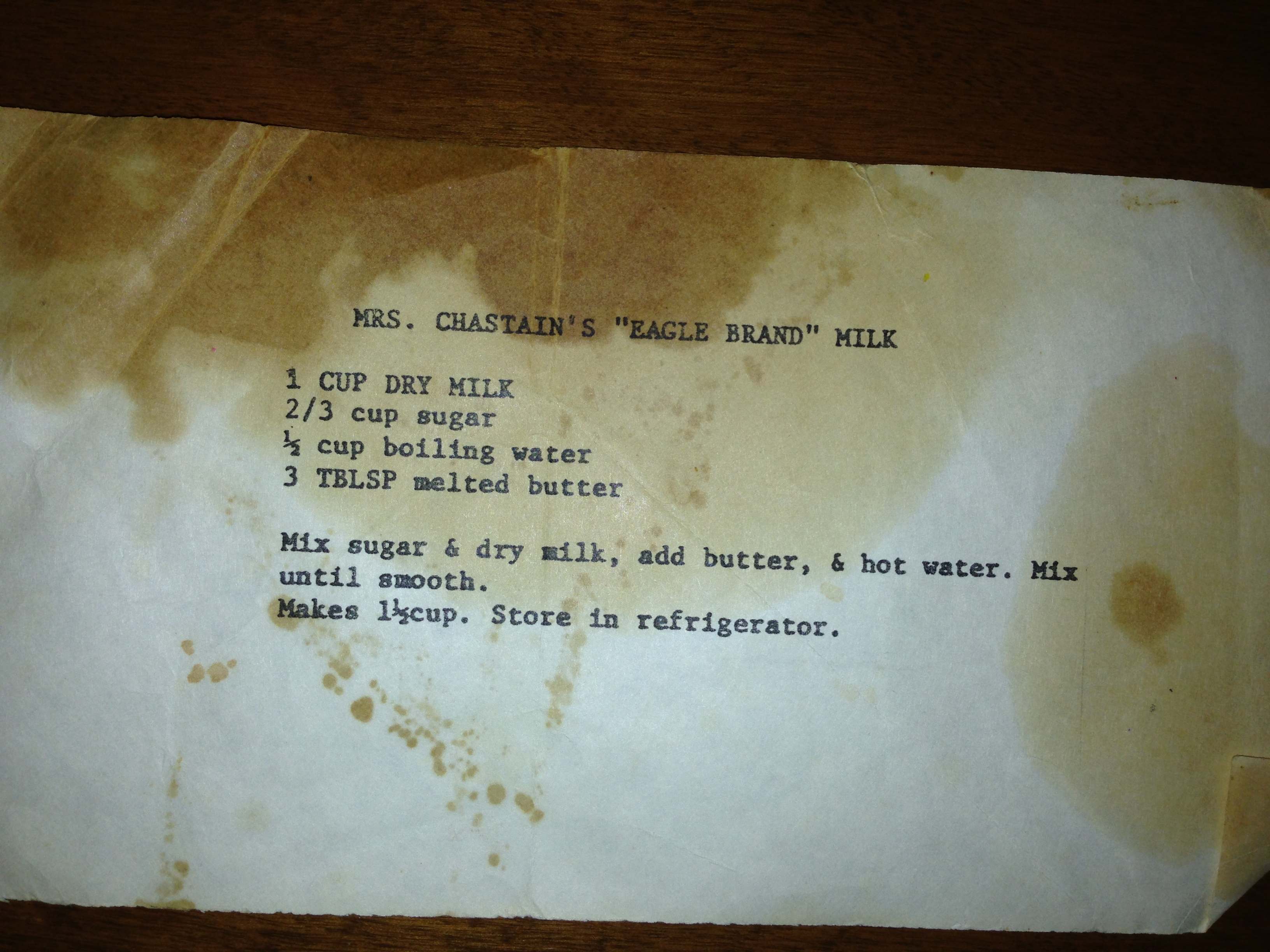
I was the most excited to see some of her DIY recipes — salami and ravioli and brisket and hot sauce (below) and sweetened, condensed milk, “for those times when you can’t find it,” Regina said. There’s never been a time that there wasn’t sweetened condensed milk, even the nonfat variety, at the store when I wanted it for a recipe. But Regina is 91, with a life experience that transcends the Great Depression and several wars. That just gave me pause, thinking how much life can change.
We’ll start with the hot sauce. “It’s hot. You have to use gloves,” Regina says.
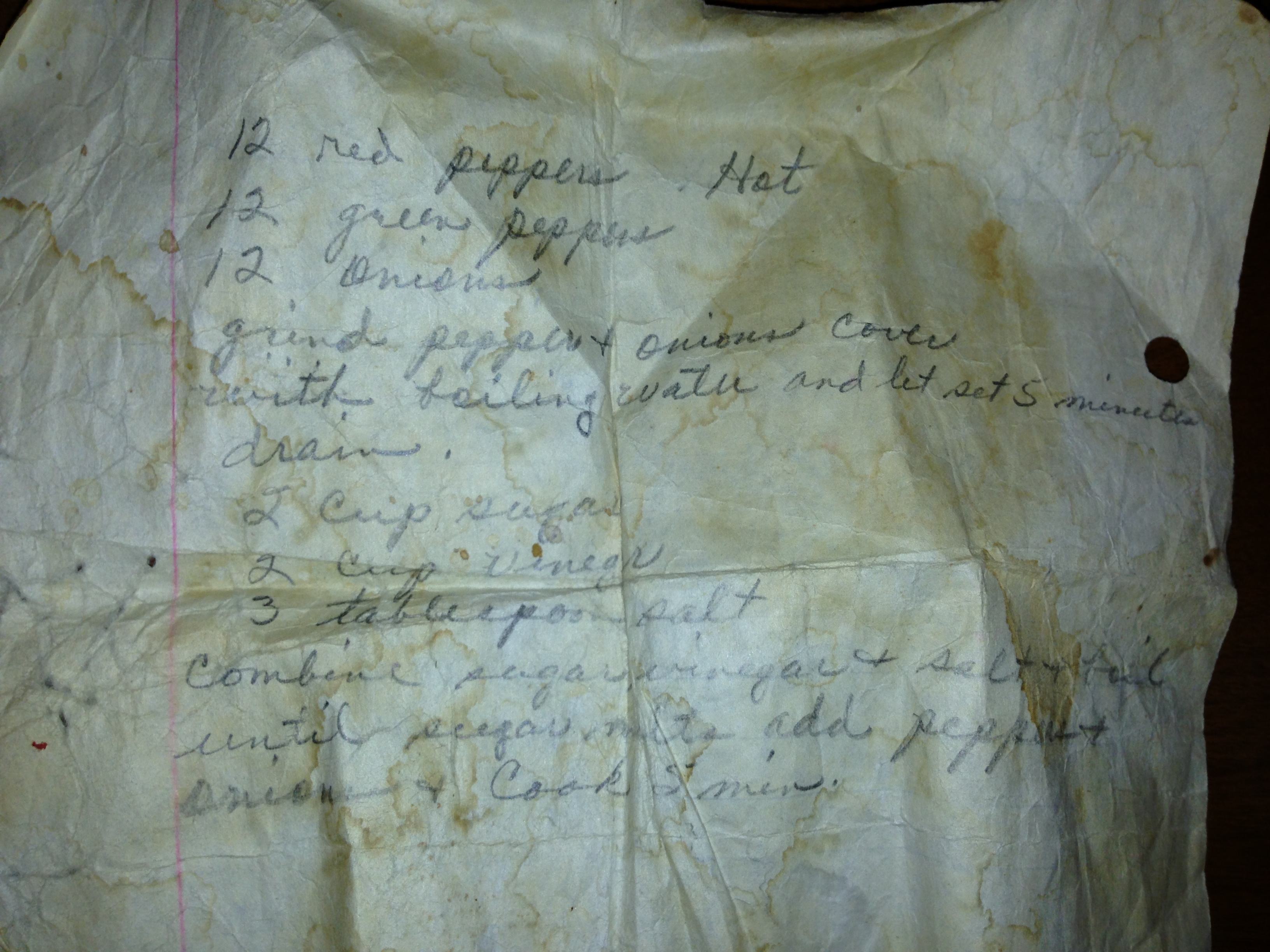
Hot Sauce
12 red peppers
12 green peppers
12 onions
Grind peppers and onions. Cover with boiling water and let set 5 minutes. Drain.2 cup sugar
2 cup vinegar
3 tablespoons salt
Combine sugar, vinegar and salt. Boil until sugar melts. Add peppers and onions. Cook 5 minutes.
Making your own way: Baked Oatmeal
I’ve racked up a lot of miles traveling to Iowa City and back the past two years. One small thing that’s always made it more pleasant was knowing at the end of the trip was a house on the hill with a comfy bed and fluffy towels and, in the morning, super-smooth coffee and an exceptionally good breakfast.
The house has the tiniest driveway I’ve ever had to maneuver my pickup into. I never would get there before sundown, but that was ok, because Ray and Shirley installed a motion-sensitive light to help out. The squeeze was totally worth it for another reason: the house was only a few blocks, walking distance, from the dorms where Paige lived at the University of Iowa for the past two years.
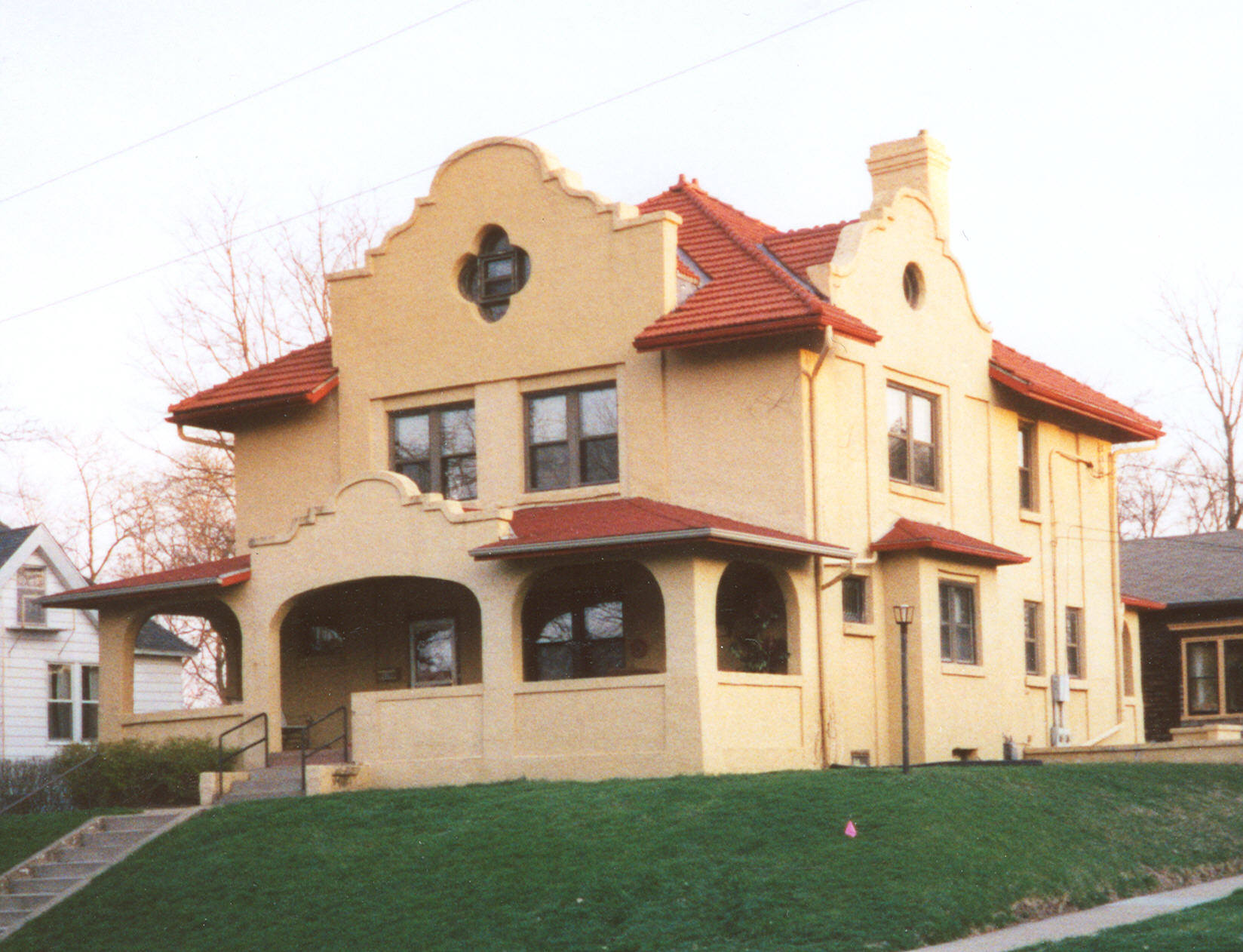
This year, we arrived for the fall semester with a new project: moving Paige into her first apartment. The morning of, I laced up the shoes and went for a morning run along the river, another pleasant part of the routine, and returned to see something I hadn’t noticed the night before. A big “for sale” sign in the front yard.
Bummer. Even innkeepers need to retire.
I’m glad I picked up their recipe book, so if I get a hankering for the way Shirley made eggs (they were never just eggs), I can do it on my own.
What was likely our last stay, though, she made baked oatmeal to accommodate a guest with dietary restrictions. I asked her to send the recipe to me, since it wasn’t in the cookbook, and then promptly adapted it to what I had in the house. It turned out terrific.
Baked Oatmeal
1 cup hazelnuts
1 cup Irish, steel-cut oats
1 large egg
1 cup fresh figs, cut bite-sized (you can substitute apples and raisins)
1/4 cup milk
1/2 cup brown sugar
1/4 cup canola oil
1 tsp. baking powder
1/2 tsp. salt
1/4 tsp. cinnamon
Toast hazelnuts in a 350 oven for 10-15 minutes until brown, wrap in kitchen towel to cool, rub skins off and set aside.
Bring 4 cups of water to boil, add oats and cook until soft, about 30 minutes. Let cool about 10 minutes. Combine egg, brown sugar, milk, oil, baking power, salt and cinnamon; fold in figs and then stir into oats. Spoon mixture into a greased loaf pan, cover and refrigerate overnight.
Remove from the refrigerator 30 minutes before baking. Preheat oven to 350 and then bake the loaf 50-60 minutes until knife inserted in center comes out clean. Cut into squares, top with a handful of hazelnuts and serve with a small amount of milk poured over the top.
Overheard in the Wolfe House #242
Peggy: “Have you seen this video of Miley Cyrus on the VMAs?”
Michael: “Mom, don’t watch that garbage.”
Vaccines. Just do it.
Until I finished Seth Mnookin’s book, The Panic Virus, it never occurred to me that all of the autism community could face backlash in the future if the anti-vaccine movement continues to take its toll.
I don’t blame vaccines for autism. Scientists have been looking for connections for years and they haven’t found any. Autism rates are continuing to rise even though they removed the mercury preservative from vaccines years ago. And, the study that supposedly linked autism to the MMR vaccine was compromised. (That’s the short version of the science, for the exhaustive, researched version, reach for Mnookin’s book.) It’s distressing that people who should know better, and people in positions of trust, promote parent choice to withhold vaccines as somehow cautious and thoughtful.
It’s not.
This week, we learned of a serious local outbreak of the measles traced to the members of a church that holds an anti-vaccine position.
You wouldn’t take your child to the doctor and then not follow the treatment protocol. That would be heartless and irresponsible. Some people get as mad as a bumped bed of fire ants thinking about changes that could come because of the Affordable Care Act — mercy, you might have to wait for care, or be denied a high-cost treatment option in favor of something less expensive. But somehow you want a choice now, passing on a well-established protocol that prevents some of childhood’s killer diseases? That’s irrational, and irresponsible.
How irresponsible? Derek Bartholomaus keeps a body count.
How to be spontaneous
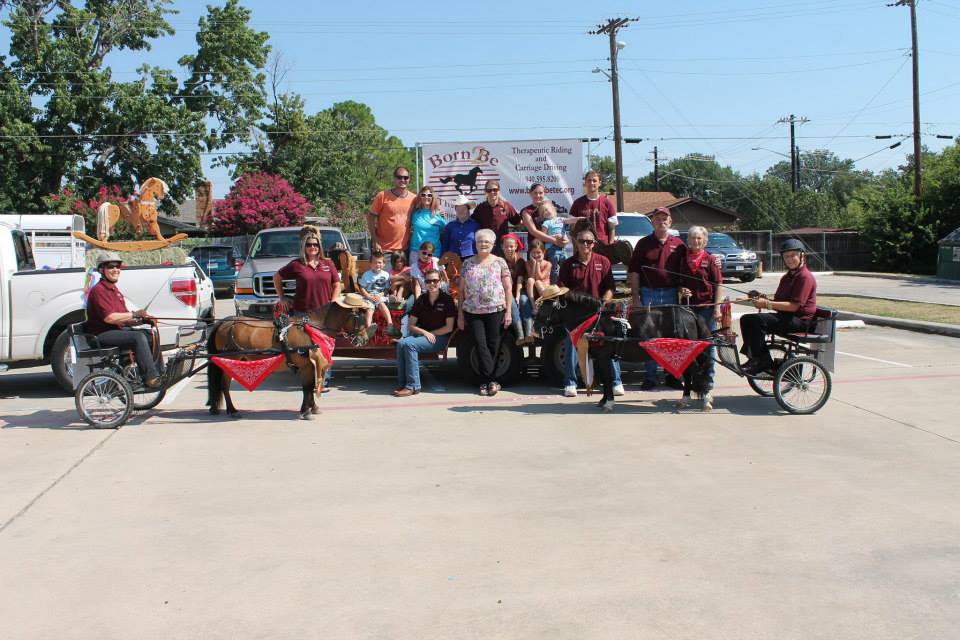
Sam got an email Friday giving him a day’s notice for a chance to ride on a float Born2Be would have in the North Texas Fair and Rodeo parade Saturday morning. He forwarded the email to me. I replied that I already had promised to run trail with Susan Saturday morning, but this looked like something fun he could do on his own.
When I got home from work that evening, he said he just didn’t think that a day’s notice was enough notice for him. Did he have to go to work Saturday? Did he have other plans? He said no. But, from time to time, through the evening, he would talk about the parade. I knew he was thinking about it.
Finally, I reminded him that in the movie, Mama Mia, the character, Harry, had a hard time being spontaneous, but he saw everyone else being spontaneous, so he wanted to try. Maybe you can try to be spontaneous like Harry, I told him.
Sam decided to call someone at B2B for more information, and went to bed early with a tentative plan of how he would fit the parade into his day. Sam’s right, a person does have to lay some groundwork to be spontaneous.
Saturday morning we all were up early, and he was ready to head out the door to get there in time to meet everyone else. He was home by lunch and said he had a great time.
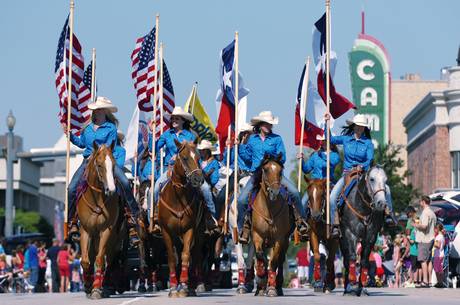
“I’m spontaneous,” he said.
Overheard in the Wolfe House #241
Peggy (passing the dishcloth): Would you wipe that tomato splatter off the pantry door please?
Sam: Yes. I’ve been doing a lot of that today.
Peggy: What do you mean?
Sam: Upstairs, I had to wipe all the dead mosquitos off the ceiling.
Letters from camp
When I visited my parents last week, my mom brought out a pile of childhood arts and letters she set aside as keepsakes over the years. The basement had flooded in a bad hailstorm and the construction paper and mimeographs and report-cards-on-cardstock of my sisters and mine were threatened by the damp air.
She encouraged us to take our pieces back home. I found some watercolors I did as a teenager that weren’t half bad. We stumbled on several long lost family photos. Mom and Dad got to re-read heartfelt Mother’s Day and Father’s Day wishes. But the most fun came after we unearthed two letters my younger sisters, Chris and Karen, mailed home from Girl Scout camp one miserable Wisconsin summer.
Michael reveled in backcountry trips he took around the Texas Hill Country with Mr. Joe and the rest of the Georgetown Parks and Rec team. Paige’s complaints the year she joined them on a kayak and camping trip to Big Bend pale in comparison to those my younger sisters made of Chalk Hills Camp in Wausaukee. Both Michael and Paige later worked as camp counselors themselves at Balcones Springs.
The next time the kids start telling stories about their “character-building” childhood experiences and Mark’s and my role in deciding that they had to walk to school in the snow, uphill, both ways — well, I’m ready with these little classics.
Mom doesn’t remember her reaction to getting them. “I think they were coming home pretty soon after that,” she mused.
From Chris:
Tuesday, Aug. 5
Dear all,
Everyone is pretty homesick here. Karen has been crying a lot. She hasn’t been feeling too well. The bug has been flying around; it got into our tent last night.
Monday night everyone in our tent was crying of homesickness and mostly of the “friendly” counselors. Ha! The only one I like best is Baters.
Monday for lunch our patrol, Baters “Twick suel Jayujayleys” went on a bike hike to the dam and had lunch there and swam for about 10 minutes. There, I got a picture of a chipmunk eating some of our bread we gave it. I was about 2 ft away from it.
I finally found out my part in the play of Mary Poppins. I’m Michael but I don’t want to be in a musical where the parts are favored. They tell us to be fair!
Just as I was writing this letter, yours & Peg’s letter came in.
Karen Hart got stung by a bee.
Today, Karen’s unit (or patrol) is going on an overnight. I made a nature stationery, so the next time I write, I’ll use it.
A guy is here with his cameras. He’s going to [take] pictures all afternoon.
Sue has got a letter for Peg you can send up to her. I don’t know the address.
I better sign off now for tent inspection.
The weather cooled off, rain, too.
Love ya,
Chris
P.S. Can you write separate letters for Karen cause we don’t see each other often. Thanks.
From Karen:
30/31
Dear Mom and Dad,
It’s real hot up here. It took from 10 to 10 [9:50 a.m.] – 12:37 with a 20 minute stop at Clintonville. We went on a dumb treasure hunt that took us around the camp when it was boiling out and we ended up with a free swim. That was yesterday.
For today, it’s been good except my shoulder and my ears hurt when I talk.
We went for a swim and they put you back 2 or 3 steps. Liz is going in junior life saving and [they] put her in advanced beginners.
The food is good except the cornbread is rotten. Later, after rest hour, we’re going swimming and canoeing. We won a cleanest cabin award for the cleanest cabin.
If you want, you can send me more fungus stuff. The medicine says to apply four times daily. If Dad could write it out, it [would] be good. If you want me to, I’ll send along the medicine. I think I have fungus on my neck and I have it all over my face.
We went canoeing and the swimming alarm went. Someone just didn’t turn in their tag.
Love,
Karen
8/2
Dear Mom and Dad,
It rained yesterday while dinner but after dinner it didn’t rain. In our cabin, we have Tricia, Susan, Laura, Connie, Judy, Elizabeth, Karen. We sleep good except Cabin 2 is our alarm clock. They wake you up at 6:50. You don’t even need to wake up until 7:30 when the bell rings.
I had hopper yesterday. You have to set the table. You have to have perfect manners or they yell at you.
There is nothing real fun up here. You just go swimming and go to the arts and crafts center. Once we got to go boating in Michigan and the lost swimmer alarm went off. It was our leader’s tag that somebody else turned.
We had patrol and I’m patrol leader. I don’t want to be it, though. I’d rather be home than up here because it’s so boring.
I don’t ache much anymore except my toe. I smashed it going over the troll’s bridge when we were playing a game when somebody was leading us all around Chalk Hills camp.
The only time I get homesick is when you write letters or I write letters. I guess Peg is coming to camp tomorrow.
Love,
Karen
Here is a little more information about Chalk Hills, which was founded in 1939 and closed after the summer of 2001. Apparently other scouts have much fonder memories of camp than my sisters do.
Overheard in the Wolfe House #240
Sam (in the laundry room): I smell electricity.
Peggy: What?
Link-and-Twist: ethical reporting on health impacts and breast cancer
Mark had this rule we lived by, and we did our best to pass on to the kids. If something makes you mad, don’t do anything about it for at least 24 hours. Oh, The Places You’ll Go! when you don’t go to your angry place. Usually, we found that we woke up the next day and couldn’t remember why we were bothered. Or, if something was still wrong, we could think it through and get it fixed.
Editors have a rule that, when someone asks to reprint a story, they have to print the whole thing. That’s smart. It keeps people from misappropriating your work, recasting it in a shape that fits them, or just flat-out stealing it.
For a while now, when it comes to my long-ago story on local breast cancer rates, I think I’ve been applying too much of Mark’s rule, and not nearly enough of the editors rule. Here’s the rub: if a blog post is misappropriating a story, a link to the whole doesn’t fix that. In the case of the breast cancer story, there are too many of these supposed “stories-behind-the-story” and “stories-around-the-story” that link-and-twist.
Bud Kennedy of the Fort Worth Star-Telegram passed on a tweet by George P. Bush today that shows a certain level of determination by a handful in Wild West Cyber Space to keep twisting that story.
So, I will do my duty and offer my annual defense (here is last year’s) of what was a damn good story in summer 2011.
I think it started when Robert F. Kennedy, Jr. made a short reference to it in an essay on Huffington Post that summer. He didn’t boil it down quite right. It grated on me, but his heart seemed to be in the right place and I thought, who am I to call up Mr. Kennedy and say, “Dude, linking is not enough, that summary wasn’t right, fix it.” After Josh Fox referenced the story in 2012 in “The Sky is Pink,” an Associated Press reporter in Pennsylvania got a Texas-sized hitch in his git-along over it.
How huge? I endured a week of emails as this reporter tried, but couldn’t (or wouldn’t), find the original report with the Centers for Disease Control and Prevention about the concern over breast cancer rates in North Texas and flat-out ignored the report on the uptick in breast cancers in Flower Mound. Then, he tried to cook up numbers of his own through the Texas Cancer Registry and fell flat.
That clunky AP story should not derail this important conversation about breast cancer and the North Texas environment, because it offers no numbers, just odd quotes of alternate experts a full year after the original story ran.
Meanwhile, Florence Williams masterful book, Breasts: A Natural and Unnatural History, has stepped in to keep the conversation going in the right direction. Or so I hope. She reminds us that as little as 10 percent of breast cancers are straight-up inherited. Most are triggered by something in the environment, either lifestyle, surroundings or both. If you haven’t read her book, shut up about what you think about breast cancer in the environment because, to those of us who have read the book, you will just sound like an idiot until you do.
In other words, for a breast book, it’s seminal. (You’re welcome, Ms. Williams.)
The good people of the Barnett Shale know what those breast cancer numbers meant in the original story — a friend, a neighbor, a colleague, a loved one who is suffering. One fellow in Double Oak so took to heart that spun-up criticism by the AP that he devoted a chapter in his book about it. Tom Hayden is a retired math professor, not an epidemiologist, but, Hey Martha! (that’s a dog-whistle to you budding epidemiologists out there) if he didn’t find something interesting: He compared breast cancer rates for two Texas cities about the same size, Fort Worth (shale) and Austin (no shale), and did the math. He appears to have found statistically significant differences in the rates, especially when examined by race.
I want to share one last thought for the really smart readers out there, and for those journalists who remember graduate school lessons about things like hegemony and logical fallacies.
Ask yourself this when you are reading a news story about the health impacts of the shale boom: does the underlying theme in this story assume that not just higher cancer rates, but statistically significant higher cancer rates, are necessary in order to change the course of this policy or practice?
There are scores of other health impacts, too, and they can be costly. To bring such a level of skepticism about health impacts and cancer risks to writing a story? I won’t do it. That’s just messed up.
Moreover, good journalists are not stenographers. We aren’t supposed to sit down and re-write the executive summary proffered by the bureaucrat and call it a day. We’re supposed to be in the community, listening, watching. We’re supposed work hard to be the light on the dark corner, the first draft of history, the dot-connector, the bellwether.
That’s what I did with the breast cancer story. All kinds of people read the news to understand what’s happening in their community and to better inform their work, and that includes scientists. The really smart ones are looking for clues to the next paradigm shift.
So, after the original story ran in 2011, maybe that’s why UT-Southwestern called me and asked for reprints of it. They told me they wanted copies for their team.
Doesn’t sound at all to me like my sources thought I got the story wrong.
There is a still a lot of work to be done in Texas. Tens of thousands of wells have been dug and those of us who drive the back roads and talk to people and know the patterns of history have got a pretty good idea what’s coming next.
The rest of this breast cancer conversation has to be taken up by you smart and discerning readers out there. You need to keep it going in the right direction.
I just got back from The Mayborn Nonfiction Conference and I need to get back to work. But if I have to, I’ll be back next summer for my annual defense of the breast cancer story.
As told to the Mayborn Nonfiction Conference
I went. I heard. I tweeted what resonated most with me.
- We’re in it – Skip Hollandsworth, all about “Bernie”
- This is a story you don’t get in the way of – Skip Hollandsworth
- Only when readers feel will they begin to think it through – Jeff Guinn
- Unconventional warfare is a cancer we pour in and once we do that, it’s hard to control – Tony Schwalm, The Guerrilla Factory
- There are no shortcuts in the process of owning your material – Jim Hornfischer
- OH at #Mayborn: “Because the person who comes back is not the person who left” – what migration/immigration and military memoir share
- Truth and courage – Alfredo Corchado, Reyna Grande
- I look for the voice, the voice that will carry it – agent Bonnie Nadell, on book proposals
- In democracy no decision is more profound than war and peace – Rick Atkinson
- In good narrative history, there is no foreseeable future – Rick Atkinson
- Public figures deserve their complexity – Kevin Merida
- I was always trying to write about this cosmic wrong – Donna Britt
- I said everything except this is a story about the healing power of love – Kelly Benham
- Storytelling can be a healing process, a wounding process – Tom Huang
- I probably should’ve run – Hugh Aynesworth, JFK eyewitness
- JFK 50 years later. Here’s a story from a Dallas reporter who was there http://t.co/05iCF8ynwy
- Love favors the prepared heart. – John Valliant
- I spent a year writing a pitch letter. Front-loading works well – John Valliant
- In memoir writing, there are ways to take a powerful memory and nail down the corners – Amanda Bennett
- It was, in the end, a love story – Amanda Bennett
- A photo can be simultaneously clear in its storytelling ability and confusing – Paul Hendrickson
- Westword’s Alan Prendergast tells the #Mayborn tribe that the original new journalists used archival research more than they let on.
- In those silences that follow your questions, you must use your imagination as well as your research to understand – Helen Benedict
- Editors see the holes in the logic that you can’t – Susan Orlean
- It’s just not the #Mayborn until Bill Marvel asks a question
- Archives have the good stuff; and can be more intimate than the interview – Susan Orlean
- There is a radiant quality to a story that has that longer timeline – Susan Orlean
- @LowellMBrown Yes. Chickens are very popular in the twitterverse
- To start on twitter, tweet about your chickens – Susan Orlean
You can follow me at @phwolfeDRC. Or find more searching #Mayborn. Or read Michael Merschel’s story (paywall) which underscores that, if you went, you could not continue to think that journalists are “heartless, self-centered or careless.” We showed, amply, that we have heart.