

Posts by Peggy
Overheard in the Wolfe House #197
Sam (on the way home from Saturday afternoon Mass and shopping): Did you enjoy today? It was a good day.
Peggy: Yes. It was a good day.
When running is flying
This morning’s run on the Durham Trail, at Lake Grapevine, was exceptionally pretty. Blue skies and cool air. (Yes, I know, the heat and the ozone comes later.) Snow-on-the-prairie, purple gayfeather and thistles in bloom. Ruby red tunas on the prickly pear. Some underbrush had grown so high I felt like a hobbit. Susan thought she saw a deer in a thicket down in a draw — probably, since we had nearly run into a deer in that draw before.
I spend a lot of time on a trail run just making sure I put one foot smoothly in front of the other. If I don’t, my right foot hits the left inside ankle enough that it’s bloodied at the end. Same motivation in watching for roots or rocks — or snakes.
But there are times I stop looking at my feet to take in the big views and admire the quiet beauty. Sometimes I wonder if other people see Texas as they should.
Where I’ve lived before, the beauty can be in-your-face — the mountain vistas in Colorado, the rich fall colors in Wisconsin, and the emerald hills and sunny poppies of northern California.
We don’t have that here. But we have this (pictures taken by RunnerSusan):


Overheard in the Wolfe House #196
Peggy: The tractor is fixed, finally. Want to mow a little today?
Sam: It’s gonna get hot today.
Peggy: How about tonight?
Sam: Tonight’s a football game, Mom.
Overheard in the Wolfe House #195
Sam: Did you remember that music I was playing last night?
Peggy: No.
Sam: Oh, I thought you did.
Peggy: Should I remember?
Sam: It was from Super Mario, Nintendo 64 version. Remember?
Peggy: No. I only remember that you played that game a lot. Did you pick the music out and write it, or did you download it?
Sam: I found it on YouTube. It would always sound like it was going up. Like the stairs at the end of the game. They went up and up and up. Do you remember that?
Peggy: No.
Sam: They had to work the repeat so that the music always sounded like it was going up. (pauses) It took a bunch of us to beat Bowzer at the end.
Peggy: Really? Who all helped?
Sam: Michael, and other people — and Dad.
Peggy: Wow.
Four weddings and a long ago funeral
Tonight was the fourth wedding I’ve attended since Mark died. The first wedding came about eight months after, and I was a wreck.
On your own wedding day, part of your heart opens up and it just gets bigger and bigger until your beloved isn’t there anymore.
Oh, mercy, that expansive, empty space hurts on another couple’s wedding day, no matter how happy you are for them.
When I first saw the date on the invitation, the night before Mark’s birthday, I wondered. But it’s also been nearly five years. Tonight, as we were waiting for the bridal procession, I heard the violinist begin the first few phrases of Ashokan Farewell — one of Mark’s favorites. My eyes couldn’t focus, and I could feel my knees and my heart giving way, but then the string ensemble transitioned to another tune.
Then, I told myself that little bit of music was just Mark’s way of winking and letting us know that they were all there …
Congratulations, Megan and Brandon!
Overheard in the Wolfe House #194
Peggy (lunching at Mean Greens, UNT’s vegan cafe): Is that sweet potato hummus?
Nancy: Could be. It tastes good. It’s different. Steve would hate it.
Music in the house
I try to live my life without regrets. Watching Sam get up each day as if it were fresh and new taught me a lot. He gets afraid, just like anyone else, but that iron-grip that messes up so many people, he just can’t do it. It’s inspiring. We don’t hold onto fears until they poison your life, turning grievances into grudges and resentments into rancor and hostility.
These days, however, I’m regretting like crazy the day I got rid of my mountainous piano music collection. I began amassing piano music at age 9 and didn’t stop until I reached my 30s, even though I decided, when I first majored in music, that the piano would no longer be my primary instrument.
It was a sweet collection, full of great editions of Beethoven, Bach and Mozart, Gershwin and Chopin, and scores of composers I’d never heard of until I played a piece I liked and learned to watch for more at the music store.
My old piano — a turn-of-the-century upright grand — had fallen into disrepair 15 years ago. Mark was a DIY-er, and somehow Sam got it in his head that he, too, could fix things. He would fix my piano. He was 10 or 11, and I would come home from work and he would have more pieces on the floor. He had the best of intentions, but I was terrified. He’d gutted about an eighth of it before I finally got him to see that it was too big of a job for him.
I started casting about for someone to do it and I didn’t have to go far. A fellow in Krum rebuilt the old beauties. He had a monster waiting list and it took a long time and a fair bit of cash.
I tried keep the overhaul of my piano in Mark’s and my discussions of what to fix or buy next, but it kept losing out.
I’m afraid I let the darkness get the best of me. I’d already put the euphonium in the case (that was because of TMJ.) I thought my music playing days were over. I boxed up all the piano music and took it to the University of North Texas library. Some of it may be in the stacks, but some of it, I’m sure, was sold or tossed.
After Mark died, the house got too quiet. I would get tears in my eyes when Paige would practice her oboe, knowing that those days were numbered, too.
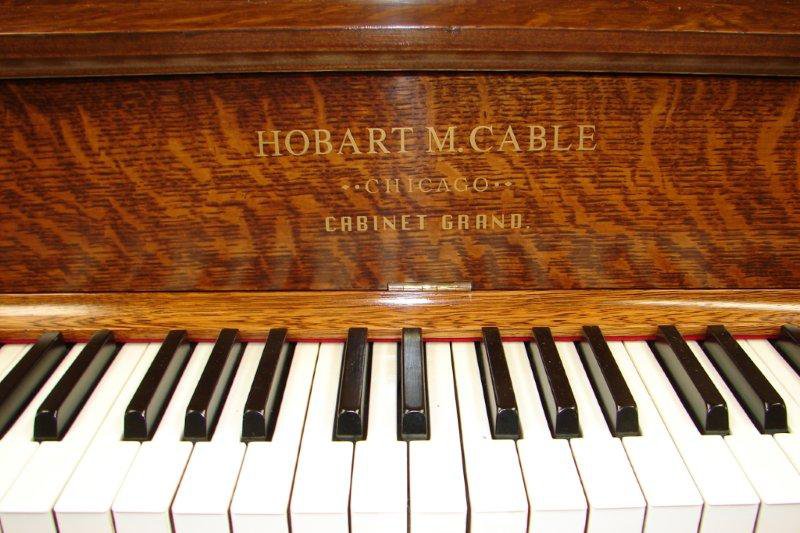
I got back in touch with Phillip Williams, the piano man in Krum, and got on the list. It took 18 months and turned out amazing. My dad had found it for me when I was 9 or 10, spending a $150 with a used piano dealer in Milwaukee. It had been a pizza parlor piano, painted light blue, and then orange. My mom put a faux wood finish on it, which Phillip said was the best thing she could have done. He stripped the cabinet to reveal a gorgeous oak tortoise shell grain.
And I think all the time about how it was the last piano he overhauled.
Phillip had put off heart surgery for years, but told me his doctor said no more. Phillip would finish my old Hobart before he went into the hospital.
Like Mark, who left the house one day and never came home, so did Phillip. I felt so bad for his young widow — she was younger than me — but I didn’t know her well enough to do anything more than send a card when I learned of his passing.
So I play the piano with what little music that stayed hidden as I was cleaning out, plus a few scores I’ve been able to find online.It’s so different now from when I was young. Back then, playing and practice was all about scales and arpeggios and technique and perfection. Now it’s all about heart.
Phillip told me that before the Great Depression there were more than 400 piano makers in the U.S. After, there were just two. He made a little “Hobart – Made in Chicago” sticker to put above the keys for my piano. It’s not authentic. Heck, he even put it on a little crooked.
But I don’t care.
It was all about the heart.
Overheard in the Wolfe House #194
Peggy: You really didn’t like this batch of spaghetti.
Sam: It had whole tomatoes.
Peggy: I should have pureed them.
Sam: You don’t have to keep saying that.
Peggy: Why? I should have. You would have liked it better.
Sam: It just shows you’re stressed about it. Don’t stress about it.
Overheard in the Wolfe House #193
Peggy: Dixie is sure snoring.
Sam: You do, too, Mom.
The move
Since we’ve been trying to move the actual family room for more than a year, I consider this move of the virtual family room a big step in the right direction.
This is my first post here, after shuttering the space at Blogspot. Like any change, I’m a little sad to walk away from the old space and its comforts and familiarity. But I’m excited, too. I’m grateful to SUMY Designs (see their link for author websites) and my good friend and running buddy, RunnerSusan, for the new, clean look and navigation. This is my third round of website design since “See Sam Run” came out in 2008. I’m still grateful for my Denton Record-Chronicle co-workers, Karina Ramirez and Randena Hulstrand (now at UNT), for helping me think through what was needed on the first website. It was a great foundation, and each version we publish on the web gets a little better.
We’ve moved everything over, including the autism resources from “See Sam Run.” I will get my news clips uploaded very soon, something I wouldn’t have given any thought to five years ago, but is all-but-required of writer websites now. The annotated list of shale stories is still here, a service to those who have wandered into the Family Room over the years, and still do from time to time, looking for that help.
I’m the most excited about the room to grow. Shahla and I continue to chip away at our new book for parents of the bravest hearts. At least once a week we meet and talk and write together for a few hours. Lately, that’s been at Jupiter House, which makes me want to digress about the concept of the third place and how coffee shops replaced the neighborhood pub, but I won’t. Any more. Shahla Alai-Rosales, by the way, is a brilliant behavior analysis professor (winner of this year’s ‘Fessor Graham award) teaching at the University of North Texas and keeping her clinic chops sharp working with Easter Seals North Texas.
It’s a much slower pace of development than I’m accustomed to at the newspaper, but it’s still faster than the seven years it took me to write “See Sam Run” or the past five years I’ve been noodling with another memoir (the seeds of which are in Carrion.)
At first, Shahla and I had seven guideposts for parents. We’ve got that down to five. We plan a short book, and it is filling up with little fables that reflect the emotional landscape we parents work in. Shahla and I are assembling other bits of information in ways that should make the guideposts easy to understand and remember. We never forget how hard it is to be a parent and how pressed you can be for time to “sharpen the saw,” as the late Stephen Covey said in 7 Habits of Highly Effective People, and how high-stakes it feels when you are the parent of a child with a disability. Research has shown that some parents, when making a decision on behalf of their child of a disability, feel the same weight of that decision as world leaders do for their countrymen.
Welcome to the new Family Room. Hope to see you again soon.