

Posts by Peggy
Overheard in the Wolfe House #264
(specifically, overheard at the grandparents’ house)
Aunt Chris: Did you see the movie “Frozen”?
Sam: Yeah. It was cool.
Black Bottom Cupcakes
This weekend, probiotic potions practice including starting a batch of soy sauce and making a batch of cream cheese.
The soy sauce will probably be done about Christmas, but the cream cheese is ready to go. I promised Michael some of it would go into an old family favorite, black bottom cupcakes. It’s so yummy. And was as easy to make as yogurt, although there are more complex recipes for cream cheese that are in the queue.
I got this recipe from a co-worker at a summer job I worked between my freshman and sophomore years, in an industrial laundry. And that is another story best told over a beer.
Black Bottom Cupcakes
Cream Cheese topping
1/2 lb cream cheese
1/3 cup sugar
1/2 tsp vanilla
1 egg
1/8 tsp. salt
1 cup chocolate chips
Cake batter
1 1/2 cup flour
1/4 cup cocoa
1 tsp. baking soda
1/3 cup oil
1 cup sugar
1/2 tsp. salt
1 cup water
1 T. vinegar
1 tsp. vanilla
Directions
Beat cream cheese until smooth. Add egg, sugar, salt, vanilla and beat well. Stir in chocolate chips and set aside.
Stir together dry ingredients of cake batter. Add water, oil, vinegar, vanilla and beat well.
Line muffin tins with baking cups and fill half way with cake batter. Top with cheese mixture and bake at 350 degrees for 30-35 minutes.
Probiotic Potion Master (in training)
I wish that the amount of awareness and research into autism and the gut was part of our lives when Sam was a baby.
I can’t help but think things would be different. I touched on some of the problems that emerged when he was a toddler in See Sam Run. But there was never, ever any kind of meaningful conversation with his pediatrician until he reached his teens.
By then, Sam’s food preferences could just as easily fall into the category of an eating disorder as be seen for what they likely were — an adaptation to what gave him bellyaches on a scale that I don’t think the rest of us could tolerate.
But Mark and I were ready to take out a second mortgage on the house so that Sam and I could spend the summer at an in-patient treatment program at Ohio State when Sam was 14 or 15 years old. Sam had shot up at that point, but he wasn’t eating meat. He looked every bit as undernourished as he was, especially his skinny little quads and calves. The program helped get kids with autism to expand their eating choices. Another parent on the autism journey whom I really trust had recommended it.
Fortunately for us, the treatment director recommended that we rule out Celiac disease before we got there, since that was something they typically did before they started treatment anyways. Sam couldn’t eat any gluten for a week before the blood draw, and he got really hungry.
He decided he could eat meat after all. He like sausage the best. He also figured out ways to taste and try new things to decide for himself whether he liked them. We decided that was enough of a breakthrough not to hock the house.
Even though they were able to rule out Celiac, the test results hinted at trouble. We talked about it, but there really was nothing more to be done, the doctor said.
When it was time for him to transition from his pediatrician to the family physician, she asked me if I had any concerns for him. Again, I tried to open the door to talk about his digestive troubles. She said she didn’t know anything about it and that was the end of that.
The issue has re-emerged for him and this time we are going after it a lot more informed. When he was a preschooler and would only eat cereal morning, noon and night, we fortified his milk with l. acidolphilus. I’d always made yogurt over the years, although Sam wasn’t always a big fan. We had some inkling of what needed to be done to help his digestive system, but we didn’t know to what degree.
My first hint, honestly, that there was a much, much bigger world of beneficial bacteria out there was when my daughter, Paige, started making us kimchi and told me it was a health food.
Light bulb.
So, now we are all about the fermenting here at the Wolfe House. I started with Creole cream cheese. I tried not to channel my home economics teacher as I sat that milk out on the counter for a day and half. But it was wonderful. I made crepes and filled them with the cheese topped them with warm strawberry jam. Sam likes cheesecake so I thought it wouldn’t be too much of a reach, but it was. Oh, well, more for Michael and me.
Plus, I had a whole bunch of the kind of whey the author of Mastering Fermentation likes to use in her recipes. Next up was probiotic ketchup (a hit) and hummus (good, but a miss for Sam.)
When we make our salad dressings now — Sam is a huge salad fan — we use vinegar with the mother. (Just Google it. The point is to eat food that’s alive.)
Judy Thurston over at Hidden Valley Dairy suggested keifer (another hit) and I just ordered supplies I need to make soy sauce and regular cream cheese.
I want to get good at making cheese so that I can make the one he loves: Parmesan.
 I’m still working on getting supplies for what I’m sure will be a big hit when I get it done: salami.
No kidding, it’s fermented. Is that why sausage was the breakthrough for him 10 years ago?
Well, back to the kitchen. Got more potions work to do.
Overheard in the Wolfe House #263
Sam: By the way …
Peggy: What?
Sam: Do you want to know something?
Peggy: Yes, I do.
See Sam Drive: Lost in mid-cities
If I ever doubted that no good deed goes unpunished, the lesson was reinforced today.
Michael had a job interview and asked to borrow the truck, since the air conditioning is out in his car.
(This is February, you say. This is Texas, I tell you.)
So out of his routine was he, that when he returned to the truck after the interview, he realized he locked the key inside. He called to ask whether there was a hide-a-key.
(No, son, a hide-a-key is something parents make their kids do with their own car.)
He didn’t want to pay for a locksmith if Sam could come with a spare. There was time. Sam loaded directions in the GPS on his phone and headed out.
Sam is not a fan of I-35. E or W. He took State Highway 114 and headed south on Precinct Line Road to where Michael was, in North Richland Hills. That was probably a mistake. Maybe U.S. Highway 377 would have been better. He got lost somewhere in Keller — so lost that he pulled over and called police to get help. They came and gave him directions.
Sam made it to the parking lot where Michael was waiting and the two of them were supposed to follow each other to I-820, where they would part ways at I-35W.
I thought all was well and then Michael called me again.
“I lost him,” he said.
Every parent of a child with autism knows this terror. And now his brother was learning it, too. Michael recounted as much of the situation as he could, starting with the moment he realized Sam was heading down State Highway 183 the wrong way, and I was at a loss of what to suggest next.
Sam had turned his phone off to save battery life. That worried us both. Not only was he not communicating with us, we knew “Siri” wasn’t giving him directions home.
“Call the police. Make a report,” I told him. “We can’t do this. We need the village.”
A co-worker (one of several that talked me off the ledge today) offered to take me home and Shahla provided a bit of support via text. Meanwhile, Michael was making a report with the police. I so hoped that Sam would be parked in the driveway when I got home, but he wasn’t.
I put an alert on Facebook and started to regroup. I would take Michael’s car and meet him and the police in North Richland Hills where they were making a missing persons report. (Because Sam has autism, it would have gone out immediately.)
And then Sam came down the driveway. I called Michael. The police shredded the missing persons report Michael had just signed.
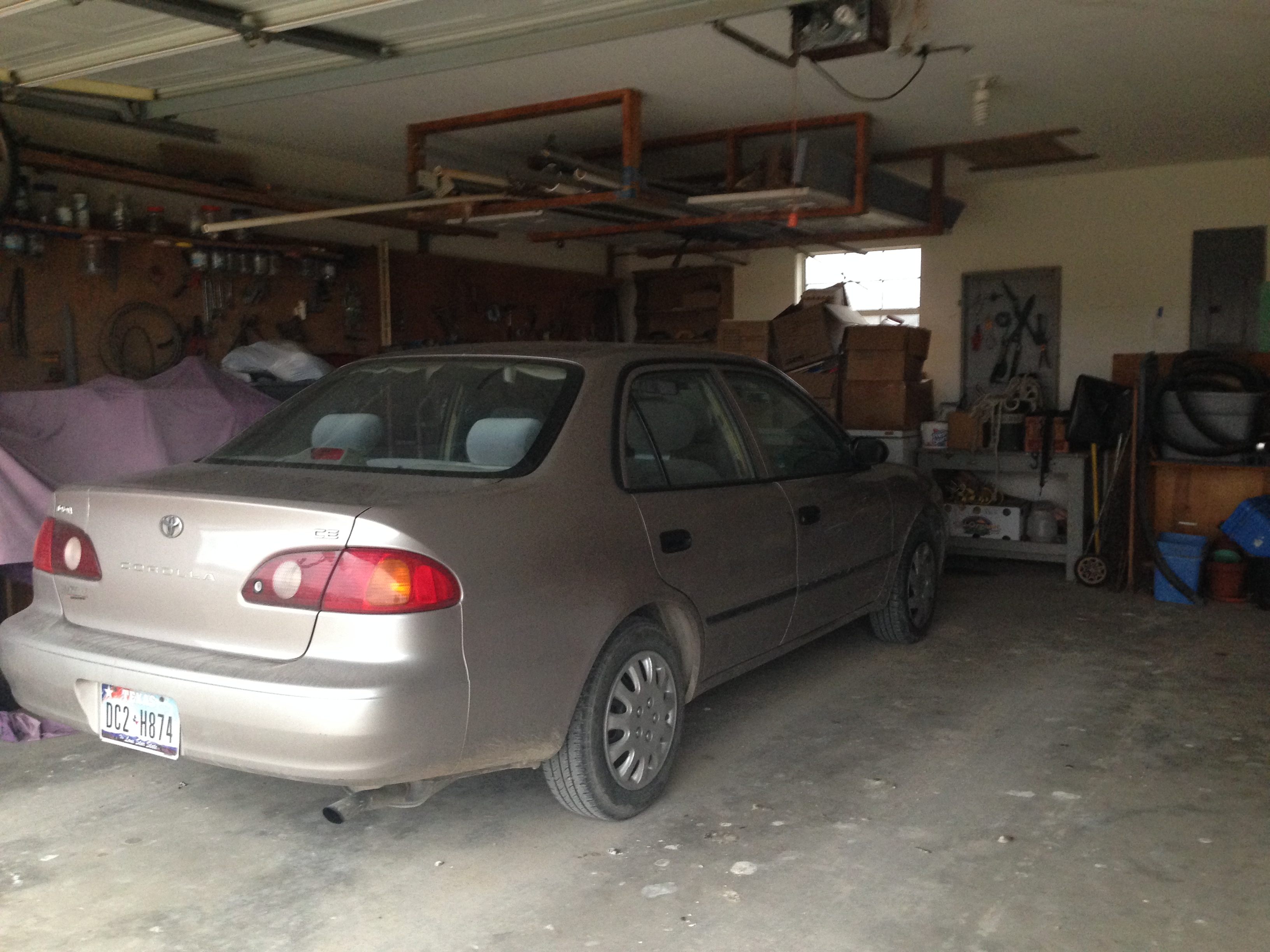
Sam’s car parked in the barn formerly known as a garage
It took awhile for the emotions to settle and the conversation to begin. Sam knew he had separated from Michael and had been going the wrong way down the highway. But he remembered the directions Michael gave and when he was sure things weren’t looking right, he turned around and went the other way. He stopped at a medical center to get directions, too, and then he headed home.
(So, Tim Ruggiero, not only pizza places, but also medical centers are good places to get directions, we learned today.)
We gave ourselves a list of things to do, like Michael joining AAA, and Sam putting GPS in his car with a “home” button, and me putting a hide-a-key on the truck, so that all our good deeds trying to help each other out don’t get so punishing.
And, a big shout-out to all of the mid-cities’ finest. You got to know autism today and you did well.
Overheard in the Wolfe House #262
Sam: Mom, I’m very relieved to be home.
Peggy: I’m relieved to have you home.
[No hug; END scene]
To work
When Sam graduated high school and got his first job sacking groceries for customers at Albertsons, a dear friend and knowledgeable researcher told me that he would grow up a lot from the experience. He was right. The things you need to grow and be successful on the job, even just organizing your life in a reliable way, are quite demanding.
Sam grew up a lot that first year, thanks to the world of work.
He’s on the cusp of another job search, one that we hope will stick a little better than we’ve been able to do on our own since he graduated from North Central Texas College in December 2012 with his associate’s degree. He’s qualified for the same kind of help that helped him land that first job.
I cannot underscore how important these programs are. Researchers at Vanderbilt and the University of Wisconsin-Madison agree that underemployment is a common among adults with autism like Sam and programs are needed to address the problem. How big? About half of adults with autism — a growing population — spend their days in segregated settings of work, or other activities, with contact with the rest of the community.
Which isn’t good for the community, either, by the way.
What else did those researchers find? Here you go:
More independent work environments may lead to reductions in autism symptoms and improve daily living in adults with the disorder, according to a new study released in the Journal of Autism and Developmental Disorders.
Researchers at Vanderbilt University and the University of Wisconsin-Madison examined 153 adults with autism and found that greater vocational independence and engagement led to improvements in core features of autism, other problem behaviors and ability to take care of oneself.
“We found that if you put the person with autism in a more independent vocational placement, this led to measurable improvements in their behaviors and daily living skills overall,” said lead author Julie Lounds Taylor, Ph.D., assistant professor of Pediatrics and Special Education and Vanderbilt Kennedy Center investigator. “One core value in the disability community and at the Vanderbilt Kennedy Center is placing people with disabilities in the most inclusive environments possible. In addition, this study gives us evidence that increasing the level of independence in an employment or vocational setting can lead to improvements in autism symptoms and other associated behaviors.”
Participants averaged 30 years of age and were part of a larger longitudinal study on adolescents and adults with autism. Data were collected at two time points separated by 5.5 years.
Taylor, in collaboration with colleagues at the University of Wisconsin-Madison, looked at such autism symptoms as restricted interests, repetitive behaviors, communication impairments and difficulties with social interactions and found the degree of independence in vocational activities was uniquely related to subsequent changes in autism symptoms, other problem behaviors and activities of daily living.
The results provide preliminary evidence that employment may be therapeutic in the development of adults with autism. Similar to typically developing adults, vocational activities may serve as a mechanism for providing cognitive and social stimulations and enhance well-being and quality of life.
Overheard in the Wolfe House #261
Sam (after working 9 of the last 10 days): 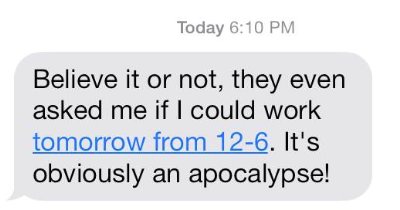
One book every ten years
I’ve been told more than once that the purpose of your first book is to help get your contract for the second one. (Also, I’m told to not quit your day job until after the third book is published, but I keep doing the math and I think that advice is for fiction writers.)
I’ve noticed that some writers are better than I am about coming up with topics for books. A children’s writer down the road from me, Lynn Sheffield Simmons, gets her inspiration from animals and her little books are now in accelerated reader programs in elementary schools. My good friend, Donna Fielder, follows the headlines with her terrific true crime books. She also works with really funny material from her column writing — it seems like she always has a project in some stage of development.
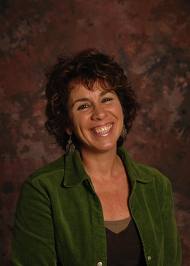
It has been almost a decade since I developed my last manuscript and managed to have “See Sam Run” published. The next one is coming along, thanks to an extraordinary collaborator, Shahla Ala’i-Rosales.
Shahla has worked with parents and children with autism for years, has helped educate a generation of certified behavior analysts, and produces informed research on the topic. It has taken us several years to put together what we hope will be a timeless guide for parents, young and old, who love and care for a child (or adult) with autism.
It’s basically this idea:

Art by Susan Sullivan, SUMY Designs
This is no easy task, y’all.
But Shahla and I have come to recognize that behavior analysis and mindfulness intersect in a way that can be powerful and life-altering for parents, their personal and professional allies, and the children in their care.
Here’s a sneak peek from our proposal:
Our book starts in territory that others have explored – the emotional landscape above which all the hard work of raising a child takes place – and moves into the extraordinary territory parents of children with disabilities must work in. As no one has written about mindful parenting and parenting children with disabilities for general audience, our book will break new ground.
Parents make decisions for their children every day. Parents of children with disabilities often make more decisions, and sometimes continue to do so for the duration of their child’s entire life. Many of those parents also recognize that their children may lack the resilience to bounce back as quickly, if at all, if a decision turns out to be a mistake. Those decisions can often feel high-stakes to parents.
Through its conversational tone, accessible to busy and overwhelmed parents, this book will both offer parents stories that are insightful and steer them towards tenets unified by time-tested, wisdom-based principles. The work is also grounded in the ethical guidelines used by professionals. In this way, the book echoes not only emerging market in mindfulness and parenting but also emerging research on mindfulness …
Overheard in the Wolfe House #260
Peggy (with the grandparents via Skype): And Michael’s big news this week is that his car passed inspection today.
Sam: And we have no idea how that happened.